

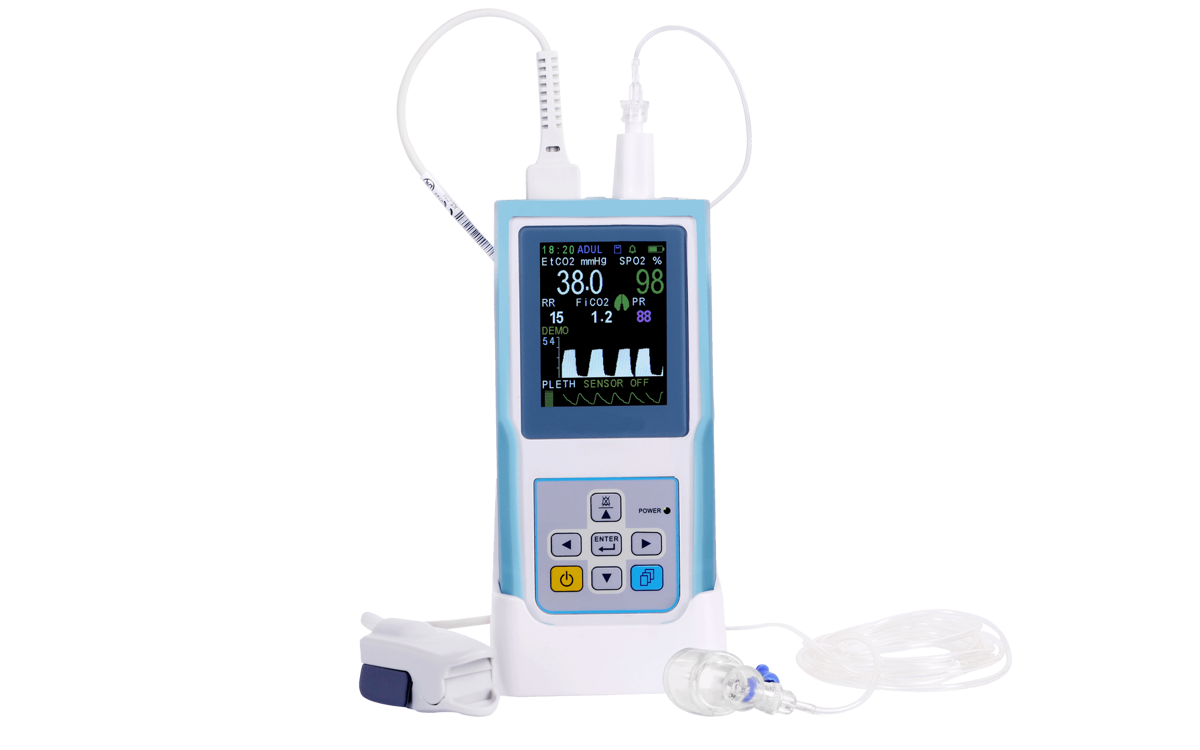
Kingst veterinary monitors measure end-tidal CO2, and on the AneSureVet models also nitrous oxide and anesthetic agents, in palm-size (mainstream) and handheld (sidestream) formats.
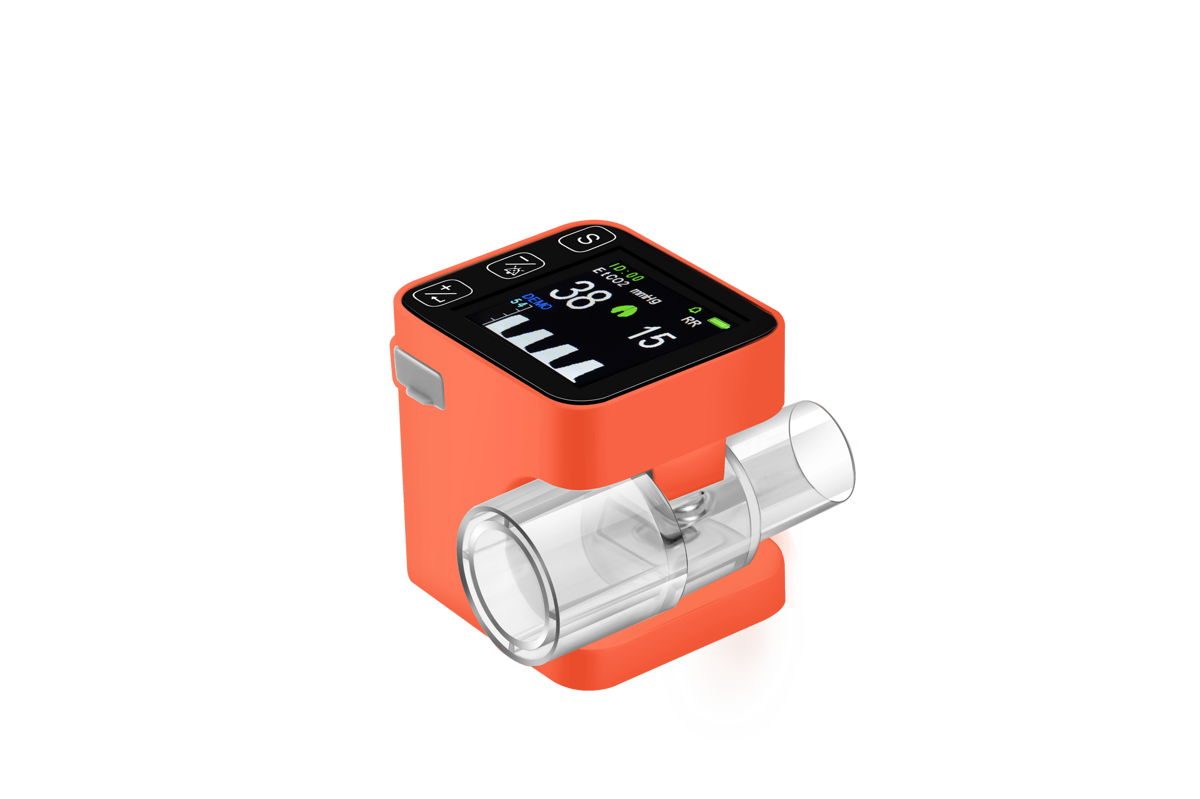
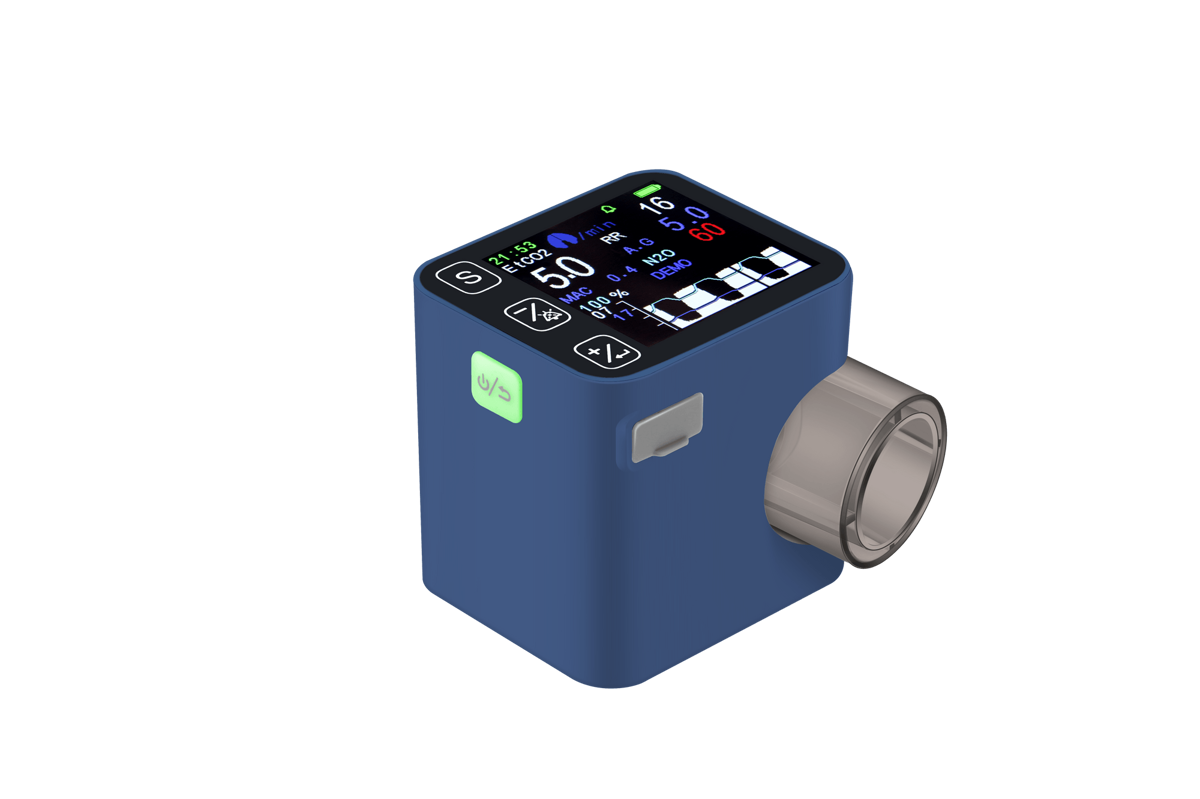
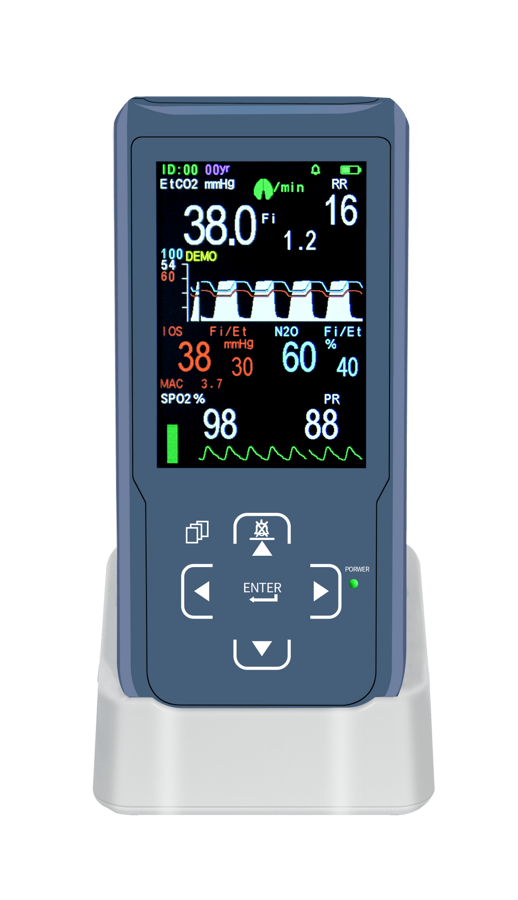
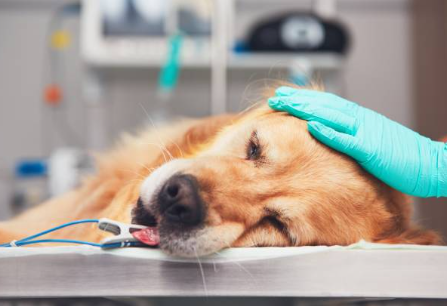

End-tidal carbon dioxide (EtCO₂) reflects the partial pressure of carbon dioxide at the end of exhalation and is an important physiological indicator of alveolar ventilation. As a non-invasive, real-time respiratory monitoring parameter, it helps veterinarians assess pet respiration more accurately in anesthesia management, respiratory disease monitoring and emergency care.
Under anesthesia. Most pet surgeries require intubation and anesthesia, and general anesthesia can suppress spontaneous breathing, leading to hypoventilation or hyperventilation. Continuous EtCO₂ monitoring allows veterinarians to evaluate ventilation and prevent CO₂ retention or hypocapnia, detect incorrect endotracheal tube placement (avoiding esophageal intubation), adjust ventilator settings, adjust anesthetic doses in real time to keep anesthesia depth appropriate, and identify complications such as alveolar hypoventilation or respiratory depression due to anesthetic overdose.
Recovery and emergency care. After surgery, EtCO₂ monitoring helps detect respiratory complications such as airway obstruction, atelectasis or respiratory failure. During cardiopulmonary resuscitation (CPR), EtCO₂ is a key indicator of resuscitation effectiveness: if it remains below 10-15 mmHg, the likelihood of successful resuscitation is low, and a sudden rise may indicate the return of spontaneous circulation (ROSC).
Exotic pets. Exotic animals are highly sensitive to anesthetic agents and prone to hypoventilation. A sustained rise in EtCO₂ values or a flattening of the waveform may indicate reduced respiratory effort or airway compromise. In light sedation for imaging, dental care or ophthalmic exams, where exotic pets are often not intubated, EtCO₂ helps detect early signs of respiratory depression, apnea or reduced tidal volume that may not be visually apparent.
Further reading: End-Tidal Carbon Dioxide (ETCO₂) in Veterinary Medicine; Application of ETCO2 monitor in animal clinical medicine; The Value and Clinical Application of End-Tidal CO₂ (ETCO₂) Monitoring in Exotic Pets.

General anesthesia can suppress spontaneous breathing, leading to hypoventilation or hyperventilation. Continuous EtCO₂ monitoring lets veterinarians evaluate ventilation, adjust anesthetic doses and ventilator settings, and identify complications such as respiratory depression due to anesthetic overdose.
Yes. After intubation, EtCO₂ monitoring quickly offers feedback that helps veterinarians assess whether the tracheal tube is properly placed and whether breathing is normal, and it helps detect incorrect placement such as esophageal intubation.
EtCO₂ serves as a key indicator of resuscitation effectiveness and prognosis. If EtCO₂ remains below 10-15 mmHg, the likelihood of successful resuscitation is low; a sudden rise in EtCO₂ may indicate the return of spontaneous circulation (ROSC).
Mainstream EtCO₂ monitors connect directly to an endotracheal tube or mask in the breathing circuit, providing rapid real-time data. Sidestream EtCO₂ monitors are suitable for non-intubated pets, using nasal cannulas or masks for sampling, which suits post-surgical monitoring or general respiratory assessment.
Select compact, species-adaptable sampling interfaces; maintain airway patency; minimize sampling line dead space and keep the connection stable; use appropriate alarm thresholds (e.g., low EtCO₂, prolonged apnea); integrate EtCO₂ with parameters such as SpO₂ and temperature; and calibrate and check the equipment before use.